
Top Most Useful Heavy Engine Oils for Construction Machinery
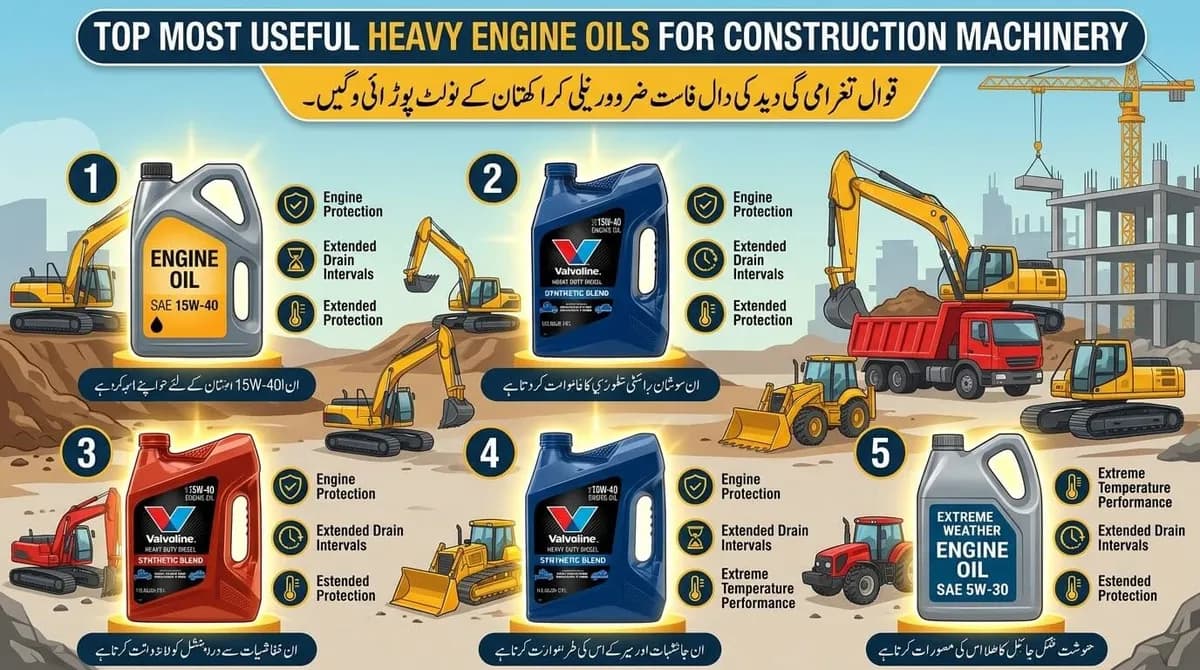
Discover the best heavy engine oils for construction machinery, including excavators, bulldozers, and wheel loaders. Learn about oil grades, benefits, and maintenance tips.
Top Most Useful Heavy Engine Oils for Construction Machinery
Heavy construction machinery operates under extreme pressure, high temperatures, heavy loads, and demanding working conditions. Choosing the right engine oil is essential for protecting engines, improving performance, reducing maintenance costs, and extending equipment service life. Whether you operate excavators, bulldozers, wheel loaders, dump trucks, or other heavy-duty equipment, the right lubricant can make a significant difference in your machine's reliability and productivity.
In this guide, we explore the most useful heavy-duty engine oils, their applications, important specifications, and how to choose the right oil for your construction equipment.
Why Is Engine Oil Important for Heavy Construction Machinery?
Heavy-duty engine oil does much more than lubricate moving components. It helps protect engine parts against friction, heat, wear, oxidation, and harmful deposits. Construction machinery often works for extended periods in dusty environments and under high loads, making proper lubrication especially important.
Using the correct engine oil can provide several benefits:
- Engine protection: Creates a protective film between moving parts to minimize metal-to-metal contact.
- Temperature control: Helps carry heat away from critical engine components.
- Deposit control: Helps keep engine components cleaner by suspending contaminants and controlling sludge formation.
- Reduced wear: Supports longer component life when the oil meets the engine manufacturer's specifications.
- Reliable performance: Provides suitable lubrication during cold starts and demanding operating conditions.
- Maintenance cost control: Helps reduce avoidable lubrication-related failures when combined with proper servicing.
For additional information about maintaining heavy equipment, read our heavy equipment maintenance guide and our construction machinery maintenance tips.
Top Heavy-Duty Engine Oils for Construction Equipment
The best engine oil depends on the engine design, operating environment, emissions system, fuel type, and manufacturer's requirements. The following oil categories and product examples are widely recognized in the heavy-duty lubrication market. Always verify the latest product specifications and approvals before purchasing.
1. SAE 15W-40 Heavy-Duty Diesel Engine Oil
SAE 15W-40 is a common viscosity grade for many heavy-duty diesel engines used in construction, transportation, mining, and industrial applications. Depending on its formulation and approvals, it can provide protection against wear, soot-related thickening, deposits, and oxidation.
This oil grade is often suitable for equipment operating in moderate to hot climates, provided it is permitted by the engine manufacturer. It is not automatically the best option for every machine, especially in very cold conditions or engines requiring a different viscosity.
Common applications:
- Diesel excavators
- Bulldozers and crawler tractors
- Wheel loaders
- Heavy-duty dump trucks
- Diesel-powered construction generators
Popular product examples: Mobil Delvac 15W-40, Shell Rimula 15W-40, and suitable grades from other reputable heavy-duty lubricant manufacturers.
Best for: Compatible diesel engines that require an approved 15W-40 heavy-duty oil.
2. SAE 10W-30 Heavy-Duty Diesel Engine Oil
SAE 10W-30 heavy-duty engine oil can offer a useful balance between cold-start performance and operating-temperature protection. Depending on the engine and oil formulation, it may also support improved fuel economy compared with a thicker oil grade.
Some modern diesel engines are specifically designed to operate with lower-viscosity oils. However, viscosity alone does not determine suitability. The oil must also meet the required API category, OEM approval, and any applicable emissions-system requirements.
Common applications:
- Compatible modern diesel engines
- Construction equipment operating in cooler weather
- Heavy-duty vehicles with manufacturer-approved 10W-30 requirements
- Equipment where the manufacturer specifies this viscosity for efficiency or operating conditions
Best for: Engines whose manuals specifically permit or recommend SAE 10W-30.
3. SAE 5W-40 Full Synthetic Heavy-Duty Engine Oil
Full synthetic 5W-40 engine oil is designed to provide suitable low-temperature flow and protection at operating temperatures when used in compatible engines. Its formulation may help with cold starts, thermal stability, and resistance to oxidation under demanding conditions.
This grade can be useful for equipment working in colder climates or for engines whose manufacturers explicitly approve 5W-40. Synthetic oil is not automatically superior for every machine; specifications, operating conditions, oil-change requirements, and total operating costs must all be considered.
Common applications:
- Compatible heavy-duty diesel engines
- Construction machinery exposed to cold starts
- Equipment operating across a wide range of temperatures
- Modern engines with approved synthetic-oil requirements
Best for: Heavy equipment requiring an approved synthetic 5W-40 formulation.
4. SAE 10W-40 Heavy-Duty Engine Oil
SAE 10W-40 is another viscosity grade used in certain diesel engines and commercial vehicles. Depending on its formulation, it can provide a suitable balance of low-temperature flow and high-temperature viscosity.
Before selecting this grade, confirm that it meets the engine manufacturer's viscosity and performance requirements. Not every 10W-40 oil is formulated for heavy-duty diesel service, so check the product label and technical data sheet carefully.
Common applications:
- Compatible commercial diesel engines
- Selected construction and industrial equipment
- Machinery whose manufacturers approve SAE 10W-40
Best for: Equipment specifically approved for a suitable heavy-duty 10W-40 engine oil.
5. Full Synthetic Heavy-Duty Diesel Engine Oil
Full synthetic heavy-duty diesel engine oils are formulated to meet specific performance requirements and may be available in several viscosity grades, including 5W-40 and 10W-30. Depending on the product, they can provide strong resistance to oxidation, effective deposit control, and reliable lubrication across varying operating temperatures.
Synthetic formulations may offer advantages in demanding applications, but the actual benefits depend on the engine, oil specification, maintenance schedule, and operating environment. Always use an oil that meets the required manufacturer approvals.
Common applications:
- Modern heavy-duty diesel engines
- Machinery exposed to temperature extremes
- Equipment operating under demanding duty cycles
- Engines whose manufacturers approve the selected synthetic oil
Best for: Compatible engines where a synthetic formulation meets the required performance and viscosity specifications.
6. Low-Ash Engine Oil for Modern Diesel Engines
Many modern diesel engines use emissions-control systems such as diesel particulate filters (DPFs) and selective catalytic reduction (SCR). Certain engines require oils with controlled levels of sulfated ash, phosphorus, and sulfur to help protect emissions-control equipment.
Low-ash or low-SAPS oils are designed for specific applications. They should not be selected solely because a machine has a diesel engine. Check the owner's manual for the required oil specification and emissions-system compatibility.
Common applications:
- Modern construction machinery with DPF-equipped engines
- Heavy-duty diesel equipment subject to specific emissions standards
- Engines requiring a manufacturer-approved low-SAPS lubricant
Best for: Modern diesel engines that explicitly require a low-ash or low-SAPS oil.
Popular Heavy-Duty Engine Oil Brands
Several established lubricant manufacturers offer products for heavy-duty diesel engines. Product suitability depends on the exact formulation, viscosity, API service category, and equipment manufacturer's approval—not simply the brand name.
- Mobil Delvac: A range of heavy-duty diesel engine lubricants for compatible commercial and industrial applications.
- Shell Rimula: Heavy-duty diesel engine oils offered in different formulations and viscosity grades.
- Caterpillar: Offers lubricants and maintenance guidance for Caterpillar equipment and engines.
- Chevron Lubricants: Offers heavy-duty lubricant products, including diesel engine oils.
- Cummins: Provides engine maintenance information and lubricant recommendations for its engines.
These are examples of established manufacturers and equipment resources, not a universal ranking. Always check the current technical data sheet and the engine manufacturer's recommendations before buying an oil.
Understanding Heavy-Duty Engine Oil Grades
Understanding viscosity grades and performance specifications makes it easier to choose the correct engine oil for excavators, bulldozers, wheel loaders, and other construction machinery.
What Does SAE 15W-40 Mean?
SAE stands for the Society of Automotive Engineers, which establishes viscosity classifications for engine oils. In a multigrade oil such as 15W-40, the number before the W indicates cold-temperature viscosity performance, while the second number describes viscosity at high operating temperatures under standardized testing.
The W stands for winter. A lower winter-grade number generally indicates better low-temperature cranking and pumping performance within the applicable SAE test requirements. The correct grade must still be selected according to the manufacturer's recommendations and the expected ambient temperature.
What Is the Difference Between API CK-4 and FA-4?
API performance categories describe engine oil requirements, including protection against wear, oxidation, deposits, and other performance factors. API CK-4 oils are intended for a broad range of modern and older four-stroke diesel engines where the category is permitted. API FA-4 oils are formulated for certain newer diesel engines designed for lower-viscosity oils and are not backward-compatible with every diesel engine.
Never assume that CK-4 and FA-4 are interchangeable. Confirm the exact API category specified in your engine manual.
For authoritative information, consult the American Petroleum Institute's engine oil resources.
How to Choose the Right Engine Oil for Heavy Construction Equipment
Selecting the correct heavy-duty engine oil requires more than choosing a familiar brand or the thickest available formulation. Follow these steps to find an oil suitable for your machinery.
1. Check the Equipment Manufacturer's Manual
The owner's manual is the most important starting point. It identifies the recommended viscosity grades, performance categories, approvals, and any special requirements for the engine.
2. Consider the Operating Temperature
Machines operating in hot environments may require a different viscosity grade from equipment that starts in freezing conditions. Use the temperature chart in the owner's manual rather than assuming that one grade is suitable year-round.
3. Identify the Engine and Emissions System
Older diesel engines and modern engines with advanced emissions-control equipment can have different oil requirements. Confirm the engine model, emissions standard, and required oil specifications before purchasing.
4. Evaluate the Working Conditions
Construction equipment often works in dusty locations, carries heavy loads, and experiences long operating hours. These conditions can increase the importance of correct oil selection, filtration, sampling, and maintenance. Follow the manufacturer's guidance for severe-duty applications.
5. Check the Technical Data Sheet
Before buying an oil, review its technical data sheet for viscosity grade, API category, manufacturer approvals, and intended applications. A product description that says "heavy-duty" is not sufficient proof that the oil is suitable for your engine.
6. Buy from a Reliable Supplier
Purchase genuine lubricants from reputable suppliers and verify product packaging, batch information, and traceability where available. Counterfeit or incorrectly labeled lubricants may expose expensive engines to avoidable damage.
For additional guidance, see our guide to choosing engine oil for heavy equipment.
When Should You Change Heavy Engine Oil?
There is no single oil-change interval that works for every excavator, bulldozer, wheel loader, or diesel engine. The recommended interval depends on the equipment model, oil specification, engine design, fuel quality, working conditions, and maintenance program.
To maintain reliable engine performance:
- Follow the engine manufacturer's recommended service interval.
- Monitor engine hours using the machine's hour meter.
- Replace the oil filter according to the service schedule.
- Inspect oil level and condition during routine maintenance.
- Consider oil analysis when approved and useful for monitoring demanding applications.
- Follow any shorter service intervals specified for severe operating conditions.
Dark oil does not automatically mean that an oil change is overdue. Diesel engine oil can darken during normal operation as it suspends soot and combustion-related contaminants. Unusual oil consumption, a sudden change in oil level, coolant contamination, fuel dilution, or an oil-pressure warning requires investigation.
Heavy Engine Oil Maintenance Tips
Correct maintenance helps your construction equipment operate reliably and protects the engine from lubrication-related problems.
- Check the oil level regularly: Use the checking procedure specified in the equipment manual and maintain the level within the recommended range.
- Use the correct oil filter: Install a compatible filter that meets the engine manufacturer's requirements.
- Keep filling equipment clean: Prevent dust, water, and other contaminants from entering the lubrication system.
- Avoid mixing incompatible oils: When changing products or specifications, follow the manufacturer's instructions.
- Investigate abnormal oil consumption: Increasing consumption may indicate leaks, wear, or another mechanical issue.
- Monitor warning indicators: Stop and investigate oil-pressure warnings according to the machine's operating instructions.
- Maintain service records: Record oil type, quantity, filter changes, operating hours, and any problems found during servicing.
Explore our preventive maintenance guide for heavy equipment for more ways to support machine reliability.
Common Mistakes to Avoid When Choosing Heavy Engine Oil
Using an unsuitable lubricant can increase maintenance risks and may contribute to premature engine wear. Avoid these common mistakes:
- Choosing oil based only on price or brand reputation.
- Assuming every 15W-40 or 10W-30 product meets the same performance standards.
- Using automotive passenger-car oil when the engine requires a heavy-duty diesel formulation.
- Using API FA-4 oil in an engine that does not permit it.
- Ignoring emissions-system requirements.
- Extending oil-change intervals without manufacturer approval or a suitable monitoring program.
- Overfilling or underfilling the engine sump.
- Buying lubricants from unverified sellers.
Always prioritize the engine manufacturer's specifications over general recommendations.
Frequently Asked Questions About Heavy Engine Oils
Which engine oil is best for heavy construction machinery?
The best engine oil is the one that meets the engine manufacturer's required viscosity grade, performance category, and approvals. SAE 15W-40 is common in many compatible diesel engines, while other engines may require 10W-30, 5W-40, or a specific low-ash formulation.
Is 15W-40 engine oil suitable for excavators?
SAE 15W-40 can be suitable for many excavator diesel engines, but it is not universal. Check the excavator's engine manual for the approved viscosity grade, API category, and ambient-temperature requirements.
Can I use synthetic oil in heavy construction equipment?
Yes, synthetic engine oil can be used when its viscosity, performance specifications, and manufacturer approvals match the engine's requirements. Synthetic oil should not be considered a substitute for checking compatibility.
Is thicker engine oil better for heavy machinery?
No. Oil that is too thick may not flow as required during startup, while oil that is too thin may not provide the specified protection under operating conditions. The correct viscosity is the one recommended for the engine and its working environment.
How often should I change the engine oil in a bulldozer?
The interval depends on the bulldozer model, engine, operating hours, lubricant, and working conditions. Follow the manufacturer's service schedule and use oil analysis only where appropriate for the equipment and maintenance program.
What is the difference between engine oil and hydraulic oil?
Engine oil lubricates and protects internal combustion engine components. Hydraulic oil transfers power through hydraulic systems and supports their lubrication and operation. These fluids have different formulations and requirements, so they should not be interchanged unless the manufacturer explicitly specifies a suitable multipurpose fluid.
Why is engine oil important for wheel loaders and dump trucks?
Wheel loaders and dump trucks often operate under heavy loads, extended working hours, and dusty conditions. Correct engine oil helps reduce wear, manage contaminants, and protect engine components when used with proper filtration and scheduled maintenance.
Can I extend engine oil change intervals by using synthetic oil?
Not automatically. Longer oil-change intervals should only be used when permitted by the equipment manufacturer or supported by an approved maintenance program. Oil formulation alone does not guarantee a longer service interval.
Conclusion
Choosing the right heavy-duty engine oil is an important part of maintaining excavators, bulldozers, wheel loaders, dump trucks, and other construction machinery. SAE 15W-40, SAE 10W-30, SAE 5W-40, SAE 10W-40, synthetic diesel engine oils, and low-ash formulations all have applications in suitable engines. However, no single oil grade or brand is best for every machine.
Before purchasing engine oil, check your equipment manual, operating temperature, engine specifications, and emissions-system requirements. Use genuine lubricants, replace filters as scheduled, and maintain accurate service records to support engine reliability and control operating costs.
If you manage a construction fleet or operate heavy equipment, selecting the correct lubricant for each engine can help support consistent performance and long-term equipment reliability.