
Life Of Excavator Operater - How a excavator drive life
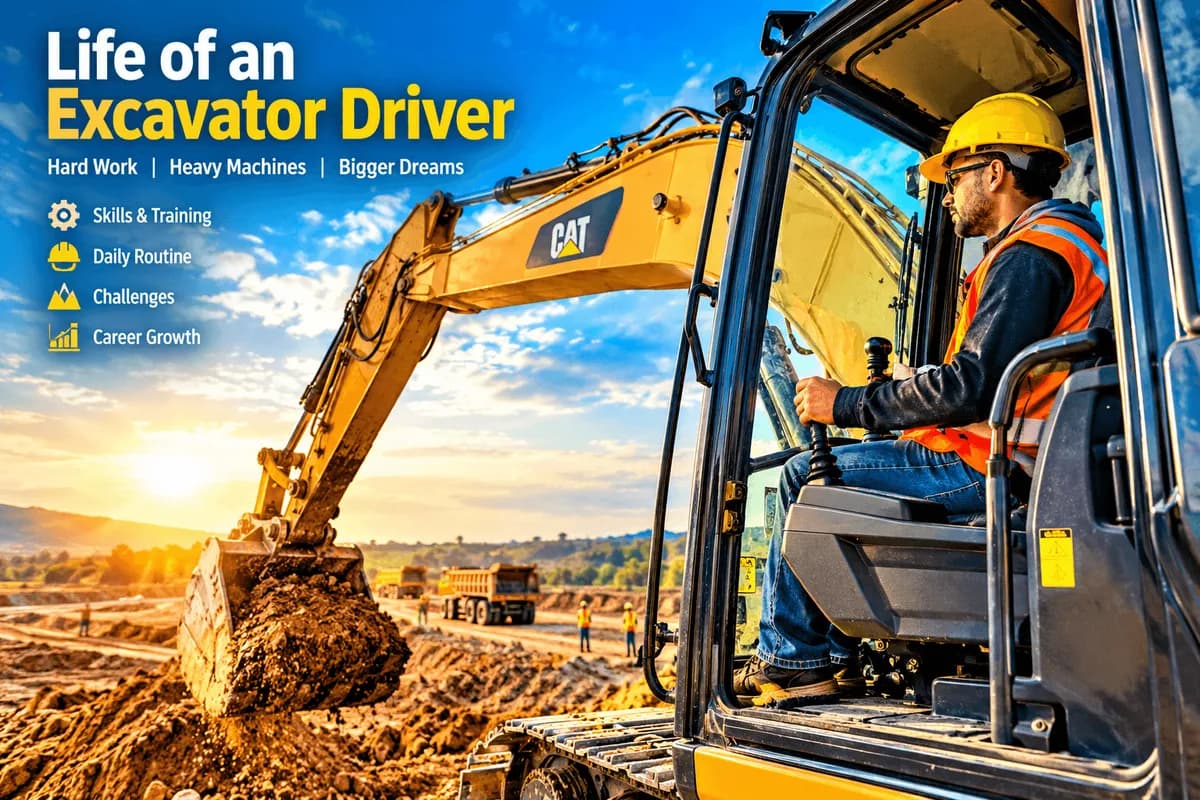
Discover the life of an excavator driver, including daily duties, essential skills, challenges, safety responsibilities, salary factors, and career opportunities.
Life of an Excavator Driver: Skills, Challenges, Daily Routine and Career
The life of an excavator driver is far more than sitting inside a heavy machine and moving dirt from one place to another. An excavator operator is a skilled professional who plays an important role in construction, road building, mining, landscaping, and many other industries. Every day brings a different task, different ground conditions, and new challenges that require concentration, patience, and experience.
An excavator may look easy to operate from the outside, but controlling a powerful machine safely and accurately requires proper training and practical experience. A good excavator driver knows how to handle the machine, understand the ground, work around other people, and complete a job without unnecessary damage or delays.
What Does an Excavator Driver Do?
An excavator driver, also known as an excavator operator, is responsible for operating an excavator to dig, lift, move, and load materials. Excavators are commonly used on construction sites for foundation work, trenching, earthmoving, demolition, road construction, and material handling.
The exact responsibilities depend on the project, but an excavator operator may be asked to perform tasks such as:
- Digging foundations and trenches
- Removing soil, rocks, and construction debris
- Loading materials into trucks
- Preparing land for construction
- Creating drainage channels
- Working on road and infrastructure projects
- Using different excavator attachments
- Performing basic machine inspections
- Following site safety rules and instructions
A Typical Day in the Life of an Excavator Driver
A typical day usually starts early. Before starting work, an experienced excavator driver does not immediately jump into the cab and begin digging. The machine needs to be inspected first. The operator may check the engine, hydraulic system, tracks, bucket, fluid levels, visible leaks, and other important components.
After the basic inspection, the operator discusses the day's work with the site supervisor or foreman. Understanding the job before moving the machine is extremely important. The operator needs to know where to dig, how deep to dig, where the excavated material should go, and whether there are workers, vehicles, pipes, cables, or structures nearby.
Once the work begins, concentration becomes one of the most important parts of the job. The operator continuously watches the bucket, ground level, machine position, and surrounding area. A small mistake can sometimes damage underground utilities or nearby property, so careful operation is essential.
Excavator Operation Requires Skill and Precision
Operating an excavator is a combination of machine control and good judgment. A professional operator does not simply move the controls quickly. Instead, every movement is planned and controlled.
For example, when digging a foundation, accuracy is extremely important. Digging too deep or too wide can create additional work and may affect the next stage of construction. Experienced operators learn to judge the position of the bucket, the depth of excavation, and the condition of the soil through years of practical experience.
Understanding Different Ground Conditions
Soil conditions can change from one job site to another. Soft soil, hard clay, wet ground, gravel, and rocky areas all behave differently. An experienced excavator driver learns how the machine responds to different ground conditions and adjusts the digging technique accordingly.
Challenges of Being an Excavator Driver
Excavator operation can be a rewarding career, but it also comes with several challenges. Working outdoors, operating heavy machinery for long periods, and maintaining concentration throughout the day can be demanding.
Long Working Hours
Construction projects often operate according to strict deadlines. Depending on the project and employer, an excavator driver may work long shifts or overtime. Sitting in the same position for several hours can also become tiring, especially when the machine is working continuously.
Heat, Dust, Noise, and Weather
Most excavator operators work outdoors. Hot summer days, dust, rain, cold weather, and construction noise can become part of everyday life. A professional operator must remain focused even when the working environment is uncomfortable.
Safety Responsibility
Safety is one of the biggest responsibilities of an excavator driver. Excavators are large and powerful machines, and their movements can create serious risks if they are not controlled properly.
Operators need to be aware of blind spots, workers on the ground, other vehicles, overhead obstacles, underground utilities, and the machine's swing radius. Following site safety procedures is not just a rule; it is an essential part of the job.
Qualities of a Good Excavator Driver
A good excavator operator is not necessarily the person who works the fastest. The best operators are usually those who can complete their work safely, accurately, and efficiently.
- Patience: Precision is often more important than speed.
- Concentration: Operators need to stay focused throughout the working period.
- Machine Control: Smooth movements improve safety and productivity.
- Communication: Clear communication with supervisors and ground workers is essential.
- Safety Awareness: A professional operator always considers people and objects around the machine.
- Mechanical Awareness: Understanding basic machine maintenance can help identify problems early.
- Experience: Practical experience helps operators deal with difficult ground and unexpected situations.
Skills an Excavator Operator Should Have
Anyone interested in becoming an excavator driver should develop both technical and practical skills. Learning the controls is only the beginning. A professional operator should understand the basic operation of hydraulic systems, attachments, machine stability, and safe working procedures.
Communication is another important skill. Excavator drivers often work closely with laborers, site supervisors, engineers, truck drivers, and other machine operators. A simple misunderstanding can cause delays or create a safety problem.
Learning to Use Different Attachments
Modern excavators can use a variety of attachments for different jobs. Depending on the machine and project, an operator may work with buckets, hydraulic breakers, grapples, augers, or other specialized attachments.
Learning how and when to use these attachments can make an operator more versatile and valuable to an employer.
Excavator Driver Salary and Career Opportunities
The salary of an excavator driver varies widely depending on the country, experience, qualifications, employer, machine type, and type of project. Entry-level operators generally earn less than experienced professionals, while skilled operators may have better opportunities in large construction, infrastructure, mining, and overseas projects.
Experience can make a significant difference in this career. An operator who can safely handle different machines and attachments may have more employment opportunities than someone who can operate only one type of equipment.
Career Growth for an Excavator Driver
Heavy equipment operation can provide a practical career path for people who enjoy working with machinery. With experience and additional training, an excavator driver may learn to operate other heavy equipment such as bulldozers, wheel loaders, backhoe loaders, or specialized machinery.
Experienced operators can also move into positions such as senior equipment operator, site supervisor, equipment trainer, or machinery specialist, depending on their qualifications and experience.
The Best Part of Being an Excavator Driver
Despite the challenges, there is something satisfying about being an excavator operator. You can actually see the results of your work. An empty piece of land can slowly become a foundation, road, drainage system, building site, or major infrastructure project.
When an excavation is completed accurately and the project moves forward successfully, the operator knows that their skills contributed to that progress. This sense of achievement is one reason many experienced operators enjoy their profession.
Is Excavator Driving a Good Career?
Excavator driving can be a good career for someone who enjoys heavy machinery, practical work, and working in construction environments. It requires responsibility and discipline, but it can also provide valuable skills and long-term career opportunities.
The most important thing is to focus on proper training, safe working practices, machine knowledge, and continuous improvement. A person who takes these areas seriously can gradually develop from a beginner into a highly skilled excavator operator.
Conclusion
The life of an excavator driver is a mixture of skill, responsibility, hard work, and satisfaction. From early morning machine inspections to long hours on a busy construction site, every part of the job requires attention and professionalism.
An excavator operator does much more than control a machine. They help prepare land, build roads, dig foundations, move materials, and contribute to projects that people use every day. The job can be physically and mentally demanding, but for someone who enjoys machinery and practical work, it can also be a rewarding profession.
Ultimately, a great excavator driver is not the person who simply operates the machine fastest. It is the person who understands the machine, respects the job, protects the people around them, and completes every task with safety and precision.
Frequently Asked Questions About Excavator Drivers
What is the main job of an excavator driver?
The main job of an excavator driver is to safely operate an excavator for digging, trenching, lifting, loading, earthmoving, and other construction tasks.
Is excavator driving a difficult job?
Learning the basic controls can be achieved with proper training, but becoming a professional excavator operator requires practice, experience, concentration, and a strong understanding of safety.
What is the most important skill for an excavator operator?
Machine control, safety awareness, precision, and concentration are among the most important skills for a professional excavator operator.
Where do excavator drivers work?
Excavator drivers can work on construction sites, road projects, mining sites, land development projects, demolition sites, drainage projects, and other earthmoving operations.
Can an excavator driver build a long-term career?
Yes. With experience, training, and additional machine skills, an excavator operator can progress to more specialized equipment or supervisory roles and find opportunities in larger construction and infrastructure projects.
SEO Information
Meta Title: Life of an Excavator Driver: Skills, Challenges & Career
Meta Description: Learn about the life of an excavator driver, including daily duties, skills, challenges, safety responsibilities, salary factors, and career opportunities.
Focus Keyword: Life of an Excavator Driver
Related Keywords: excavator driver, excavator operator, excavator operator job, heavy equipment operator, excavator driving, excavator driver career